
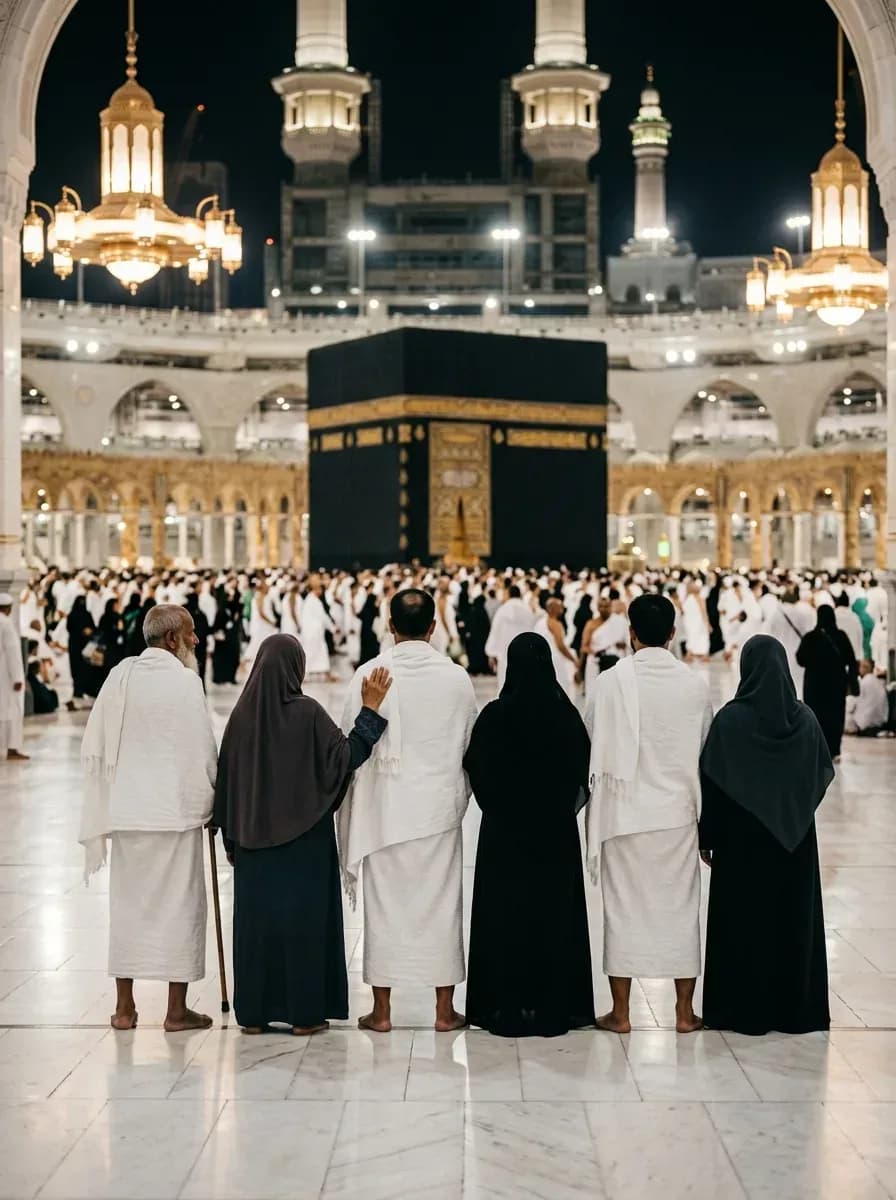
Health, Heat, and Walking Realities in Makkah & Madinah
Worship here includes walking, heat, and pacing
Umrah and Hajj are spiritual journeys with physical demands. In Makkah and Madinah, pilgrims walk for Tawaf, Sa'i, prayer movements between hotels and mosques, and everyday errands. Heat and dry air increase fluid loss. Families from Bangladesh who prepare only their documents and not their bodies often feel surprised by fatigue on day two. Honest preparation is kindness to yourself and to the elders traveling with you.
Overview of walking realities
Daily walking commonly adds up across hotel corridors, Haram courtyards, and ritual routes. Many travelers find that total daily distances can reach roughly 5 to 10 kilometers depending on hotel distance, prayer frequency, and crowd patterns. Tawaf timing varies with crowding; when the mataf is calmer it may take around an hour, and when crowded it takes longer and requires more patience.
Madinah walking is often steadier and emotionally gentle, yet still adds steps between the hotel and the Prophet’s Mosque. Elevators, prayer-time surges, and marble floors that become slippery when wet all shape your energy plan.
Practical health checklist
Begin light walking practice at home weeks before travel if your doctor agrees. Break in soft, supportive shoes and sandals suitable for long marble floors. Pack blister care, a compact umbrella for sun, electrolyte sachets if advised by your clinician, and your regular medications with prescriptions.
Drink water regularly, including Zamzam when available, rather than waiting for thirst. Rest between prayers when elders look tired. Choose shade routes when possible. Schedule heavier outdoor movement for cooler hours when your group plan allows.
If you have heart disease, diabetes, asthma, or recent surgery, complete a medical review in Bangladesh before you fly. Carry a simple medication list in English and Bangla. Tell your group leader about conditions that need pacing.
Hotel distance is a health decision
A nearer hotel can reduce daily walking load. A farther hotel may require shuttles or longer walks that accumulate. When comparing packages on /hajj-umrah, ask for realistic distance language, not only star ratings.
Common mistakes
Wearing new hard shoes on day one. Skipping water because queues feel long. Walking midday sun without shade. Ignoring early blister pain. Comparing yourself with younger companions and pushing past dizziness. Forgetting that ritual sincerity does not require unsafe exhaustion.
How AL-MARSUS INTERNATIONAL helps
AL-MARSUS INTERNATIONAL (License 0665) discusses walking load when families choose hotels and package types. We encourage nearer options for elders when available and keep expectations honest. Review package choices on /hajj-umrah and ask practical questions via /contact. Health decisions remain between you and your clinicians; we help with logistical realism, not medical claims.
Pacing for mixed-age groups
Agree on meeting points and a slow-lane plan. One adult can escort elders to seating areas while others complete optional extra Tawaf. Nobody should feel spiritually lesser for resting. Rest can protect the ability to pray later with presence.
Night rest matters as much as daytime water. Overstimulation and late returns to the hotel shrink recovery. Protect sleep windows when your itinerary allows, especially before travel days between Makkah and Madinah.
Crowd and prayer-time strategy
Move toward the Haram with extra time before congregational prayers so you are not forced into a stressful sprint. After prayers, wait for corridors to thin when elders need slower exits. Carry a small foldable stool only if your group and local guidance allow and it does not obstruct others.
Food and energy
Prefer lighter meals before long walking blocks. Heavy late-night food plus early Fajr movement is a common fatigue mix. Keep dates or simple snacks for controlled energy, and avoid experimenting with unfamiliar street foods right before major rituals if your stomach is sensitive.
Signal words for the group
Agree on a simple phrase that means “I need to stop now.” Pride keeps many pilgrims walking past safety. A clear stop signal is part of group mercy.
Common questions
Q1: How much walking is required daily? A: You may walk 5 to 10 kilometers daily.
Q2: How long does Tawaf take? A: Around an hour if not crowded.
Q3: How to avoid heatstroke? A: Drink Zamzam water and use an umbrella.
Q4: Why are comfortable shoes important? A: To prevent painful blisters.
Soft next steps
Start gentle fitness and shoe trials now. Ask hotel distance questions before you book. Compare realistic options on /hajj-umrah and send elder-care routing questions through /contact so your worship plan includes body care from the first day.